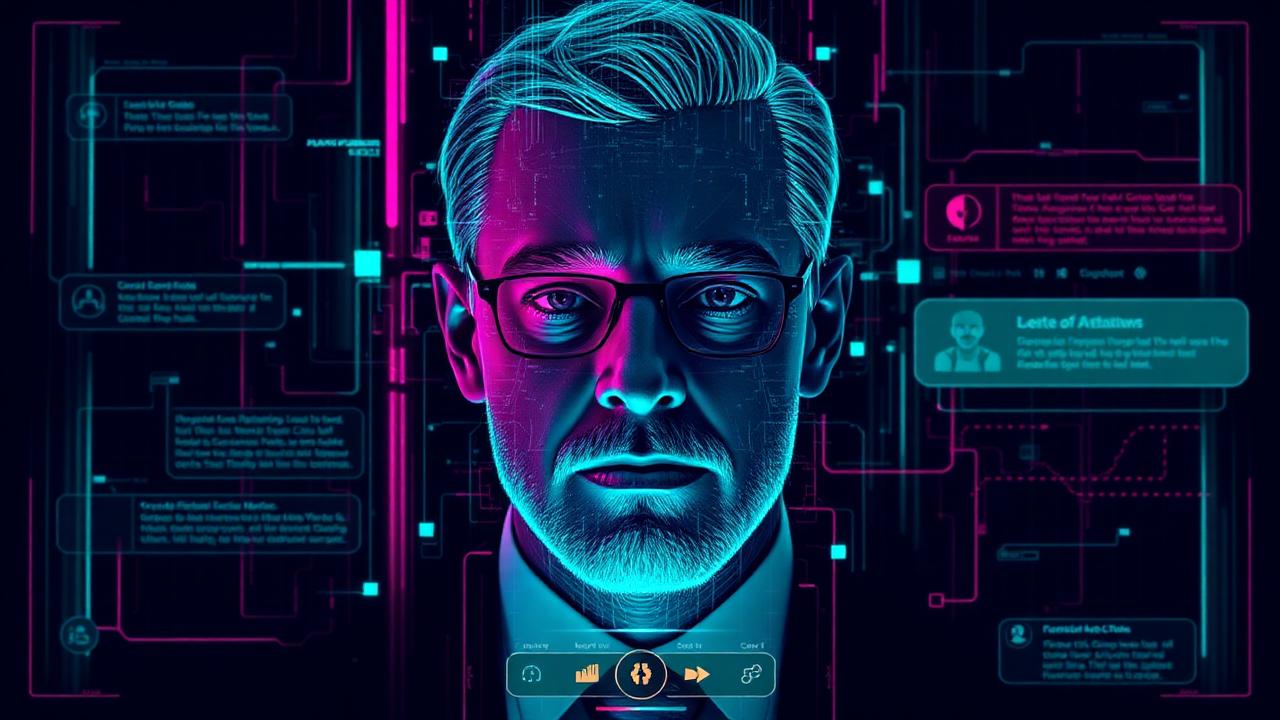
Deepfake Fraud in the Boardroom: The New CEO Scam
# Deepfake Fraud in the Boardroom: The New CEO Scam
The landscape of cybercrime is in constant flux, with threat actors continuously refining their techniques to bypass security measures. For years, businesses have been on high alert for Business Email Compromise (BEC) and executive impersonation scams. But what if the CEO's voice you hear on a video call isn't actually the CEO? Welcome to the new era of boardroom fraud, powered by deepfake technology.
This isn't science fiction. It's a clear and present danger for mid-market businesses, where a single fraudulent transaction can have devastating consequences. Understanding the mechanics of deepfake fraud is the first step toward building a resilient defense.
The Evolution of Executive Impersonation
Traditionally, CEO fraud relied on text-based deception. A scammer would spoof the CEO’s email address, perhaps registering a domain that was off by a single letter, and then email an employee in the finance department with an urgent request to wire funds for a confidential acquisition or to pay a new vendor. While effective, these scams could often be thwarted by a discerning employee who noticed the subtle inaccuracies in the email address or the unusual nature of the request.
Deepfake technology supercharges these attacks by adding a layer of authenticity that is incredibly difficult to penetrate. By using artificial intelligence to generate synthetic audio and video, criminals can now create a convincing digital puppet of a key executive. The urgent email is no longer just text; it's followed by a voicemail that sounds exactly like your boss, or even a brief video call where their likeness and voice are convincingly mimicked, adding a layer of pressure and legitimacy that most employees are not prepared to question.
Imagine this scenario: your CFO receives an email from you, the CEO, about a time-sensitive, confidential M&A deal. The email warns that a lawyer will call with wiring instructions. A few minutes later, the CFO gets a call. The voice on the other end is yours, referencing the confidential deal and giving the green light to proceed. The urgency is palpable. The voice is familiar. Would your CFO proceed with the transfer? In many cases, the answer is a deeply concerning "yes."
How Deepfake Scams Are Executed
Creating a convincing deepfake for corporate fraud is a multi-step process that combines technical skill with sophisticated social engineering.
- Reconnaissance: Attackers scrape the internet for publicly available audio and video of their target. This includes keynote speeches, media interviews, quarterly earnings calls, and even social media videos. The more data they can feed into their AI models, the more accurate the final deepfake will be.
- Weaponization: Using increasingly accessible and powerful deepfake software, criminals generate a voice clone or a video-based avatar of the executive. Voice cloning, in particular, has become alarmingly simple, with some tools requiring only a few seconds of audio to create a passable imitation.
- Execution: The attacker deploys the deepfake. This is rarely a cold call. It is the culmination of a broader social engineering campaign. They may have already compromised the executive’s email account to understand the context of current business operations, making their fraudulent request seem perfectly normal.
- Exploitation: The core of the attack relies on exploiting human trust and established hierarchies. By mimicking a figure of authority and manufacturing a high-pressure situation (e.g., a "do-or-die" deal, a late payment that will derail a project), they short-circuit an employee’s critical thinking and push them to bypass standard security protocols.
Red Flags: Identifying a Potential Deepfake
While deepfake technology is rapidly improving, it is not yet perfect. Training your team to spot the subtle and not-so-subtle giveaways is a critical line of defense.
Video Red Flags: * Unnatural facial movements: Awkward smiling, unnatural blinking, or eyes that don’t seem to focus correctly. * Poor lip-syncing: The audio and video tracks may not be perfectly aligned. * Digital artifacts: Look for blurring or distortion, particularly where the face and neck meet the hairline or background. * Strange lighting and shadows: The lighting on the person may not match the lighting in the background environment.
Audio Red Flags: * Monotonous or flat tone: The voice may lack the normal emotional inflections of human speech. * Unusual pacing or rhythm: Odd pauses or a cadence that feels unnatural. * Lack of ambient noise: A complete absence of background sound can be a sign that the audio was generated in a sterile digital environment.
Crucially, the biggest red flag is the request itself. An unexpected, urgent demand for a wire transfer, a change in payment details, or the sharing of sensitive data should always trigger suspicion, regardless of who appears to be making the request.
Building a Multi-Layered Defense
Technology alone cannot solve this problem. Defending against deepfake fraud requires a combination of robust processes, technological controls, and, most importantly, a well-trained, security-conscious workforce.
- Establish Out-of-Band Verification: This is the single most effective defense. Mandate that any request for funds or sensitive data received via email or a single communication channel be verified via a different, pre-established channel. If a request comes via email, verify it with a phone call to a known number. If it comes via a video call, use a secure messaging app or a text message to confirm.
- Implement Challenge Questions or Safewords: For high-stakes transactions, consider using a verbal safeword or challenge question system known only to key executives. A simple, "What was our mascot in college?" can stop a multi-million dollar fraudulent transfer in its tracks.
- Continuous Security Awareness Training: Your employees are your last line of defense. Training must evolve beyond phishing emails to include specific modules on deepfake and voice-cloning scams. Simulate these attacks to test and reinforce your team’s ability to respond correctly under pressure.
- Enhance Technical Controls: Strengthen email security to flag spoofed domains and keywords associated with financial transactions. Multi-factor authentication (MFA) should be non-negotiable for all critical systems, from email to banking portals.
Deepfake technology represents a significant new vector for fraud, one that preys on our most basic instincts of trust. In the fast-paced environments of manufacturing, healthcare, and construction, the pressure to act quickly can override the caution necessary to spot these sophisticated scams. Protecting your organization requires a proactive and layered security posture. A thorough assessment of your current governance and cybersecurity protocols is the essential first step to understanding your vulnerabilities before they become liabilities.
TRNSFRM specializes in providing comprehensive cybersecurity assessments that identify gaps in your defenses, from technical controls to employee training. Contact us today to schedule a governance or cybersecurity assessment and ensure your organization is prepared for the next generation of cyber threats.